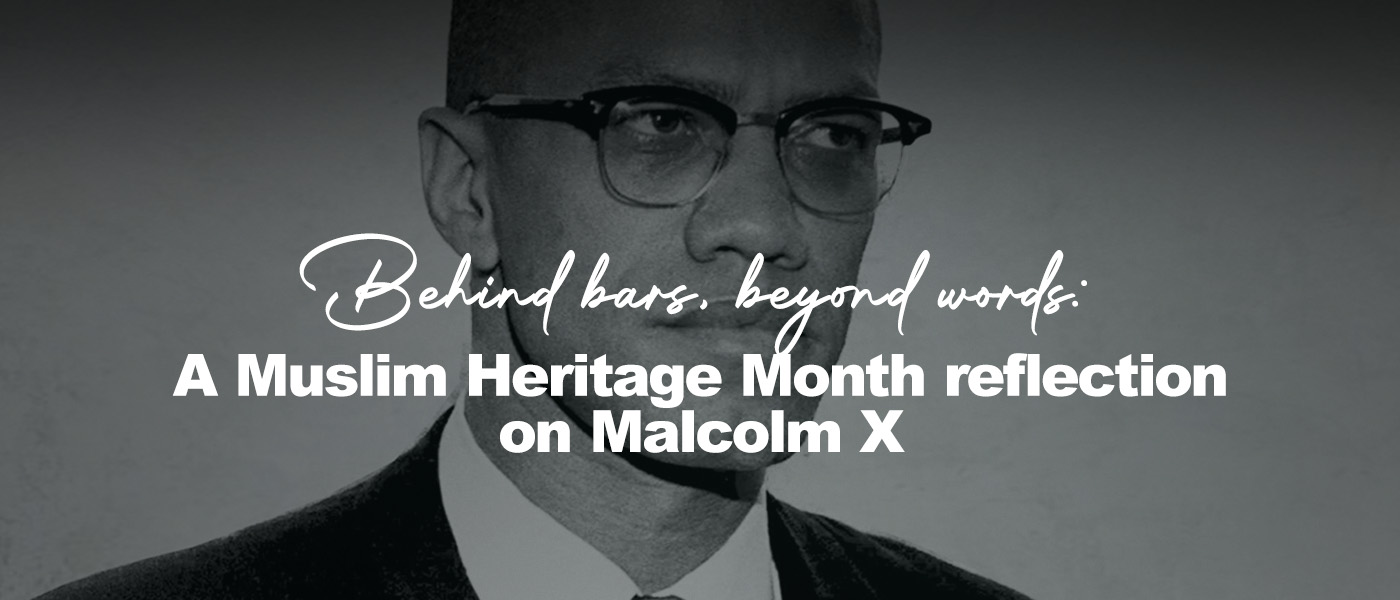
For many people, Malcolm X is remembered as a firebrand, a voice of rage, a man perpetually frozen in photographs mid-speech, finger pointed, eyes burning, and mouth open as if he were born in a state of fierce leadership and revolution. Although that’s not entirely false, this depiction is incomplete in a way that does both him, and us Muslims, a great disservice. To remember Malcolm X only as a political figure is to strip his life of its deepest meaning because the true axis of his transformation was not ideology, nor even racial consciousness, but Islam itself. What makes this nucleus of his life all the more empowering is that Malcolm X did not discover the religion of comfort, safety, and community in a mosque lit with bright lights or in a peaceful environment. This discovery began in a prison cell where a young man the world had already discarded began, for the first time, to reconstruct himself before Allah (SWT).
Malcolm X’s story matters to the modern day American Muslims not only because he’s a famous personality, and not because he was gloriously eloquent, and also not because he was right about so much that this country still refuses to confront. It matters because his life is one of the clearest Muslim American examples of what The Quran describes when it speaks about hearts being turned, about people being brought from darkness into light, and about human beings rediscovering themselves when they finally encounter truth with sincerity. His journey forces us to grapple with a reality we often romanticize but rarely sit with, and that is, some of the most profound spiritual awakenings in this country have taken place behind bars, in spaces designed not for reflection but for erasure, where Islam arrives as the last rope lowered into a pit of darkness and solitude.
When Malcolm X was sentenced to prison, he was a young Black man who had witnessed horrific levels of abandonment, violence, humiliation, and was met with the quiet and corrosive message that he was disposable. The streets had educated him in survival, but his journey had only just begun to discover his life’s true purpose. Prison, in the language of America, was supposed to be his end. The closing of his life’s chapter, and the warehousing of a problem yet in the merciful language of Allah (SWT), it became something else entirely. For Malcolm X, this became a threshold for a revolution that the world had yet to see. It became the place where a mind starved of direction began to feast on divine wisdom, history, and eventually, spirituality. It became the place where rage was slowly rechanneled into purpose, the place where a man who had learned to live against the world began to imagine living for something greater than himself.
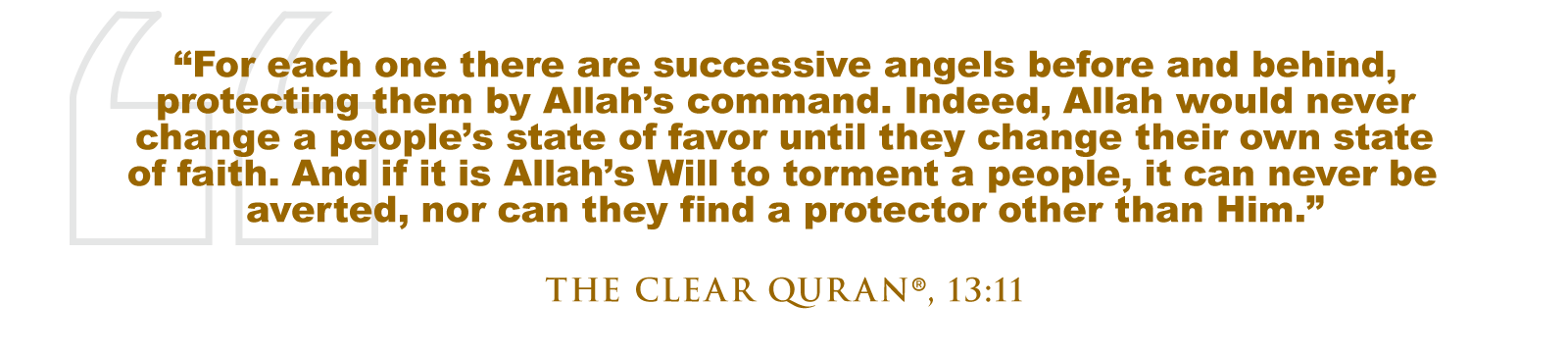
Allah (SWT) tells us in The Quran, “For each one there are successive angels before and behind, protecting them by Allah’s command. Indeed, Allah would never change a people’s state of favor until they change their own state of faith. And if it is Allah’s Will to torment a people, it can never be averted, nor can they find a protector other than Him.” (The Clear Quran®, 13:11)
Malcolm X’s life is a living personification of this verse because what changed within him did not come from a reform program or an institution, but from an internal revolution that was sparked by the religion of Allah (SWT). He learned that discipline could be sacred. He learned that identity and his voice could be reclaimed, and through Islam, he learned that even someone buried under the weight of his past could stand before Allah (SWT) with a new name, a new direction, and a new claim to dignity. This is why, every incarcerated Muslim who opens a copy of The Quran in a cell, every man or woman who learns to pray under fluorescent lights, every person who encounters Allah (SWT) in a place built to strip them of selfhood is, in some way, walking a path Malcolm X illuminated.
To speak about Malcolm X during Muslim American Heritage Month is not merely to honor a figure from the past, but to confront a living reality in the present. It is to ask whether we truly believe in the redemptive power we preach, whether we see prisons as graveyards for human potential or as fields in which Allah (SWT) still plants seeds, and whether we are willing to recognize that some of the most authentic expressions of Islam in America have emerged not from comfort, but from captivity. Malcolm X’s life demands that we remember Islam not as an accessory to success, but as a force that meets people at their lowest point and teaches them how to rise powerfully.
The system that was unable to break Malcolm X
To understand how Malcolm X became such a renowned personality, one must begin with the world that shaped the small boy known as Malcolm Little. This is significant because not only do we see the physical conditions that Malcolm X grew up in, but also the spiritual climate of a country that had mastered the art of robbing Black children of their futures. He was born in 1925 in Omaha, Nebraska into a world still vibrating with the aftershocks of slavery, even though it wore a mask of modernity. His father, Earl Little, was a Baptist preacher and because of his beliefs, he was a target. Malcolm X’s family was driven out of Nebraska, and although they traveled to Lansing, Michigan, racial oppression still followed them like an eerie shadow. In 1931, when Malcolm X was just six-years-old, his father was brutally murdered.
Discrimination against Malcolm X’s family increased after the death of his father leading to the state intervening in his household and deeming his mother, Louis Little, unfit to parent her children. Malcolm X was separated from his siblings and placed into foster care. Despite these conditions, in the arena of education, Malcolm X’s performance testified to a bright future until his teacher, a white male, told him that his dreams of becoming a lawyer were simply unattainable. Allah (SWT) says in The Quran, “When they are told, ‘Do not spread corruption in the land,’ they reply, ‘We are only peace-makers!’ Indeed, it is they who are the corruptors, but they fail to perceive it.’” (The Clear Quran®, 2:11-12)

When we look at Malcolm X’s family and this verse from The Quran, we see that the nation systematically dismantled it by removing a father, erasing and silencing a mother, shutting down a child’s aspirations, and then watching as the consequences of these experiences play out. Throughout his teens, Malcolm X continued his journey of trying to find himself and his ultimate purpose. By 1946, he was arrested and sentenced to a decade in prison for burglary. Contrary to what many would say about being incarcerated, Malcolm X later referred to this moment of his life as a “blessing in disguise,” but this certainly is not meant to overlook the deep pain that had to pass before seeing the light of enlightenment.
If Allah (SWT) guides whom He wills, and He does, then Malcolm X’s story reminds us that guidance does not always arrive in a way that is beautiful. Sometimes, it crashes into a man in chains. Sometimes, it begins in the rubble of state violence, in the loneliness of a child separated from its parents, and in the rage of a boy told that he cannot dream. However, if the heart remains capable of reflection, even under the weight of injustice, then Allah’s (SWT) door is never closed.
Allah (SWT) says, “As for those who struggle in Our cause, We will surely guide them along Our Way. And Allah is certainly with the good-doers.” (The Clear Quran®, 29:69)

Before the bars ever closed behind him, Malcolm X had already been imprisoned by poverty, racism, state neglect, and the lie that he could never be more than what the world had made him. Yet when he finally encountered Islam, he clung to it like a man drowning who suddenly saw nothing but the rewards of his countless struggles.
Prison—where Allah (SWT) broke the ego, not the soul
Malcolm X entered prison in 1946 not as a seeker of Allah (SWT)’s religion, but as a man carrying the full weight of betrayal (betrayed by the American dream, by the institutions that had dismantled his family, by the education system that had denied his worth, and by a society that had reduced his life to survival on the streets). Yet, it was precisely in that state, hardened, suspicious, and self-reliant, that Allah (SWT) chose to begin the quiet work of transformation. There is a certain mercy in the way prison strips life down to its bare essentials. Noise is replaced with silence. Distractions are replaced with time, and for some, that silence and time become mirrors—whilst it may be harsh to look into at first, it is still spiritually fulfilling.
He then began to receive letters from his siblings introducing him to the Nation of Islam. Shortly after, Malcolm X began to immerse himself in literature. Page after page, night after night, he read. Dictionaries, philosophy, Black history, religious texts, whatever he could get his hands on. It was in prison that he learned how to read with discipline, how to write with purpose, how to sharpen his thinking and analyze systems of oppression. However, above all else, it was where he began to connect with Allah (SWT). When Malcolm X began to read the blessed verses of The Quran, this was the first book that seemed to speak directly to his existence and insist that Allah (SWT) sees, Allah (SWT) knows, and Allah (SWT) never abandons the oppressed.
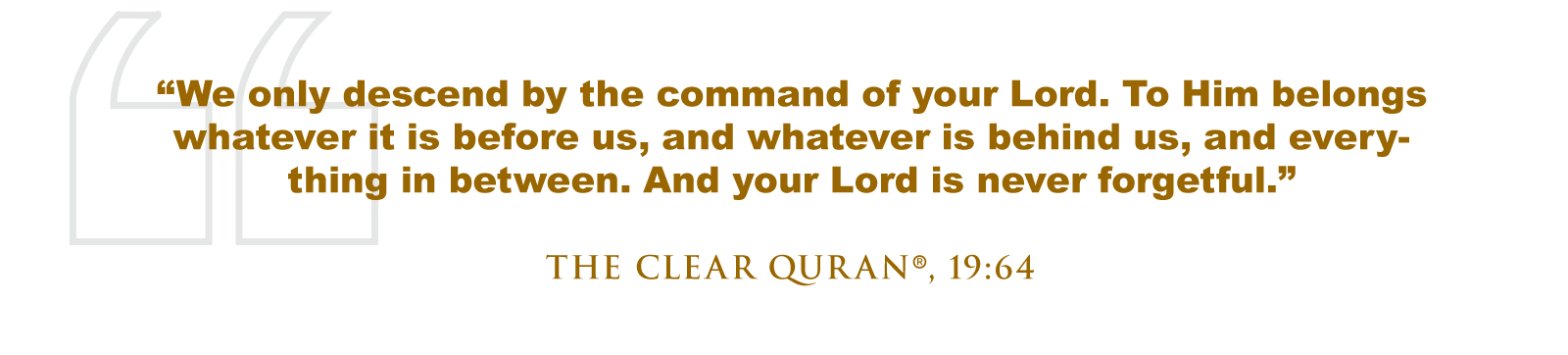
Allah (SWT) says, “We only descend by the command of your Lord. To Him belongs whatever it is before us, and whatever is behind us, and everything in between. And your Lord is never forgetful.” (The Clear Quran®, 19:64)
There was no imam delivering a khutbah in front of him, no Arabic teacher guiding him, he had no access to a masjid, a minbar, or even a Muslim community. Yet Allah (SWT), in His mercy, opened a crack in that prison wall and through it, Malcolm X found a way to crawl back to Himself. He says again in The Quran, “Surely Allah loves those who always turn to HIm in repentance and those who purify themselves.” (The Clear Quran®, 2:222)

When Prophet Yusuf (as) was thrown into prison, it was not a detour in his story, it was a divine setting, chosen by Allah (SWT), where truth would be preserved and justice would be prepared. Malcolm X walked a similar path. His prison cell was not an interruption. It was a crucible.
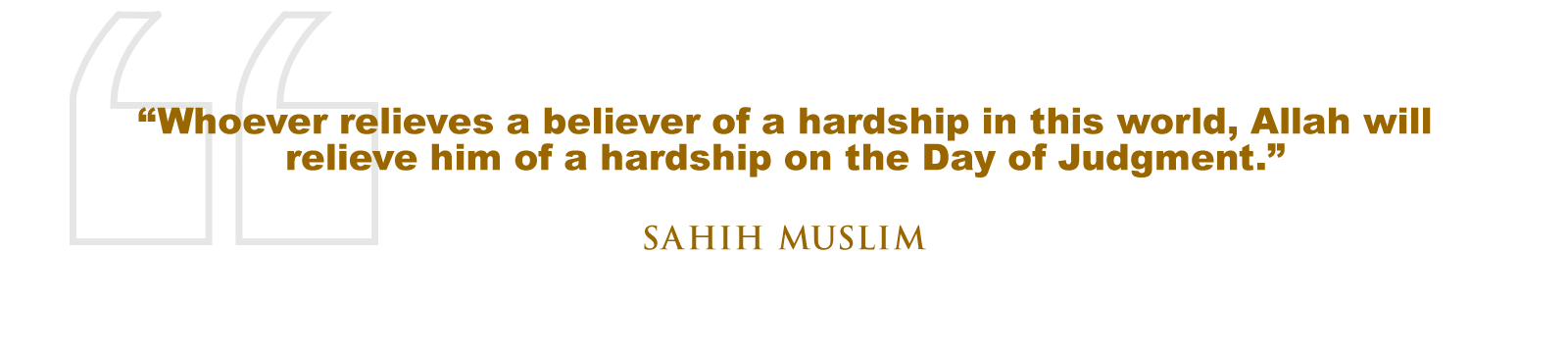
This is why the work of prison dawah is not ancillary to our mission as a Muslim community, it is central. If MalcolmX had not found Islam in prison, the world might never have heard his voice. How many Malcolms are still behind bars today reading, yearning, breaking down the walls of their former selves, waiting for someone to send a Quran, a letter, a word of mercy? Our Prophet (SAW) has said, “Whoever relieves a believer of a hardship in this world, Allah will relieve him of a hardship on the Day of Judgment.” (Sahih Muslim)
By the time Malcolm X walked out of prison in 1952, he had learned to fear Allah (SWT) more than man, to discipline his soul rather than just his body, and to speak only when truth demanded it.
Islam behind bars, Malcolm X’s legacy, and the living light of incarcerated Muslims
What American Muslims must begin to acknowledge and realize is that what happened to Malcolm X behind those prison walls is still happening today in countless prison cells across this country where men and women, stripped of almost everything, are meeting Allah (SWT) with the rawness that only confinement can produce. If Malcolm X’s journey showed us anything, it’s that the prison is not spiritually dead. In fact, for many, it is the only place where the world finally goes silent enough to hear Allah (SWT). The Quran calls this tafakkur which means reflection. A kind of deep thinking that is only possible when distractions fall away and the soul has no one left to face but itself.
Allah (SWT) says in The Quran, “Have they not reflected upon their own being? Allah only created the heavens and the earth and everything in between for a purpose and an appointed term. Yet most people are truly in denial of the meeting with their Lord!” (The Clear Quran®, 30:8)

However, unlike Malcolm X, most of them do not leave prison to public acclaim. They are not met with crowds, nor interviews, nor a place at the podium. Many come out to stigma, isolation, and a Muslim community unsure of how to embrace them. Others never come out at all serving life sentences, or decades, with no visits, no masajid, no khutbah, and no one to remind them that they still matter to their ummah. Because if Malcolm X taught us anything, it is that we cannot afford to ignore the hearts behind bars. If we, as a community, fail to see them, fail to serve them, fail to believe in their potential, then we are not just failing them. We are failing Allah (SWT).
Islam in Prison, for example, is a spiritual and communal lifeline, and it serves as a direct response to the very real hunger for faith, purpose, and belonging inside correctional facilities across the United States. Yet the transformation that inmates experience doesn’t sustain itself in isolation. It requires resources, teachers, and people who are willing to enter the forgotten places of this society and say, “You are not forgotten. You are still part of this Ummah.” This organization is about honoring the words of our Prophet (SAW) when he said, “Visit the sick, feed the hungry, and free the prisoner.” (Sahih Bukhari)

Too often, incarcerated Muslims emerge from prison with deep Islamic knowledge, profound taqwa, and a sharpened sense of purpose only to be met with silence from the very ummah they thought would embrace them. That silence is a betrayal, and Islam in Prison is the correction. You cannot honor Malcolm X without honoring the place that remade him, and you cannot honor that place without serving those who are still in it.
Allah (SWT) said, “And what will make you realize what attempting the challenging path is? It is to free a slave, or to give food in times of famine to an orphaned relative, or to a poor person in distress, and—above all—to be one of those who have faith and urge each other to perseverance and urge each other to compassion.” (The Clear Quran®, 90:12-17)
The pilgrimage that rewrote the horizon
When Malcolm X boarded a plane to the Muslim world in 1964, his heart was already heavy with loss. He had broken ties with the Nation of Islam, endured surveillance and death threats, and was beginning to understand that the movement that had once saved him could no longer hold the full truth of what he had come to believe. He was alone, politically unprotected, and increasingly aware that his journey was no longer ideological, it was existential. He needed to see for himself what Islam looked like outside the context of race and rage. In the shade of the Ka’bah, among pilgrims of every skin tone and social class, Malcolm X encountered the kind of equality that America had only ever claimed in slogans. He profoundly wrote in his letter, “Never have I witnessed such sincere hospitality and the overwhelming spirit of true brotherhood as is practiced by people of all colors and races here in this ancient holy land… Islam has the power to remove the cancer of racism from the hearts of all White Americans if they would submit to the One God.”
Allah (SWT) says, “Call all people to the pilgrimage. They will come to you on foot and on every lean camel from every distant path, so they may obtain the benefits in store for them, and pronounce the Name of Allah on appointed days over the sacrificial animals He has provided for them. So eat from their meat and feed the desperately poor.” (The Clear Quran®, 22:27-18)

Once the soul experiences Tawheed, the pure Oneness of Allah (SWT), it becomes allergic to every form of false division. Race, nationalism, class, tribe, all of it becomes dust when placed beside the singular reality of divine truth.
The work continues behind the walls
Malcolm X’s journey did not begin in a masjid or end in a speech. It began in a prison cell, where he encountered The Quran, and ended with his life offered in full submission to Allah (SWT). That arc, from confinement to clarity, from ego to imaan, is not just history. It is a living pattern, still unfolding in the lives of countless incarcerated Muslims today. And yet, too many of them walk this path alone. That is why Islam in Prison matters not as a project, but as an obligation. It is the rope we throw to those reaching in the dark. It is the lifeline for the man discovering Tawheed through a tattered copy of The Quran, the woman memorizing surahs without a teacher, the convert praying in a crowded dorm room because there’s no space for a prayer area.
To support this work is not just to honor Malcolm X, it is to continue his legacy. It is to say we see you and you are part of us, and we believe in the Lord who brought light to a man in chains and made him a servant of truth. That miracle didn’t stop with Malcolm X, it is still happening every day behind bars. The only question is whether we’re willing to be part of it.
Dua
O Allah! For every man and woman in prison searching for You, place The Quran in their hands and imaan in their hearts. Guide them as You guided him. Free them from despair, doubt, and shame, even before their doors are opened.
Make us a community that remembers them, that serves them, writes to them, and stands for them. Do not let us honor transformation while ignoring those still becoming.
Make our Islam one that heals, our hearts ones that remain humble, and our legacy one that carries truth with sincerity. You are the One who never forgets the forgotten. We place them in Your care.
Ameen!