Vision
A society in which every person has access to The Quran and its message in a language they understand, allowing its guidance to reach hearts, transform lives, and illuminate society.
Our Accomplishments
Furqaan Project is the crown jewel of the Al-Furqaan Foundation® amongst various other projects of Al-Furqaan Foundation®. We have new initiatives and a fresh perspective for this division along with a new identity. Furqaan Project was always at the center of our activities.
Now with new initiatives, Furqaan Project is trying to become the single source for all your needs of dawah resources. InshaAllah, over and above our popular English Translation, we are trying to provide the translation of The Quran in all major languages of the world. We are also trying to provide under one roof all necessary materials such as books, leaflets, brochures and electronic media to use for dawah purposes or to teach Islam to new Muslims.
Alhamdulillah, it is through the planning and hard work of the dedicated personnel in this division Al-Furqaan Foundation® has been able to distribute around millions of copies of the translation in the United States, out of which thousands copies were distributed door to door.
A society in which every person has access to The Quran and its message in a language they understand, allowing its guidance to reach hearts, transform lives, and illuminate society.
In obedience to Allah’s command and following the mission of His Messenger ﷺ, Furqaan Project works to convey the message of The Quran, the revealed words of Allah, to every person throughout the United States and Canada.
Furqaan Project serves as a platform through which individuals, communities, and institutions can participate in this honorable and blessed mission, contributing their support, advocacy, relationships, expertise, and networks to help carry it forward, while continuously developing and expanding effective channels for Quran distribution.
Al-Furqaan Foundation® was established in 2003 with the mission to deliver the message of The Quran to every individual in America in order to fulfill 5 rights The Quran has upon us as Muslims, which are: Believe It, Recite It, Understand It, Act Upon It & Convey It.
Over the years, Al-Furqaan Foundation® has launched several projects to fulfill this mission. Our projects primarily serve the US but also expand into Canada, with future plans to take Furqaan Project, our Quran Distribution Project, to other English Speaking Countries like U.K, Australia, and India, InshaAllah.
Al-Furqaan Foundation® is recognized as an international dawah organization. We work closely with many national interfaith organizations for the betterment of society. While having continuous focus on self-development and outreach, we paved our place as a leading grassroot organization in the American Muslim community.
Al-Furqaan Foundation® is a registered 501(c)(3) non-profit, tax exempt nationwide dawah organization based in Chicago, IL.
Wajahat Sayeed founded Al-Furqaan Foundation® in 2003 around a focused conviction: The Quran should be made widely accessible through organized, professional, and sustainable distribution. Furqaan Project and the Foundation’s outreach infrastructure grew from that original mission.
With a background in investment management and strategy and operations consulting, Sayeed approached Quran distribution not simply as a campaign but as an institutional challenge involving supply, publishing, marketing, partnerships, logistics, fundraising, and long-term organizational capacity.
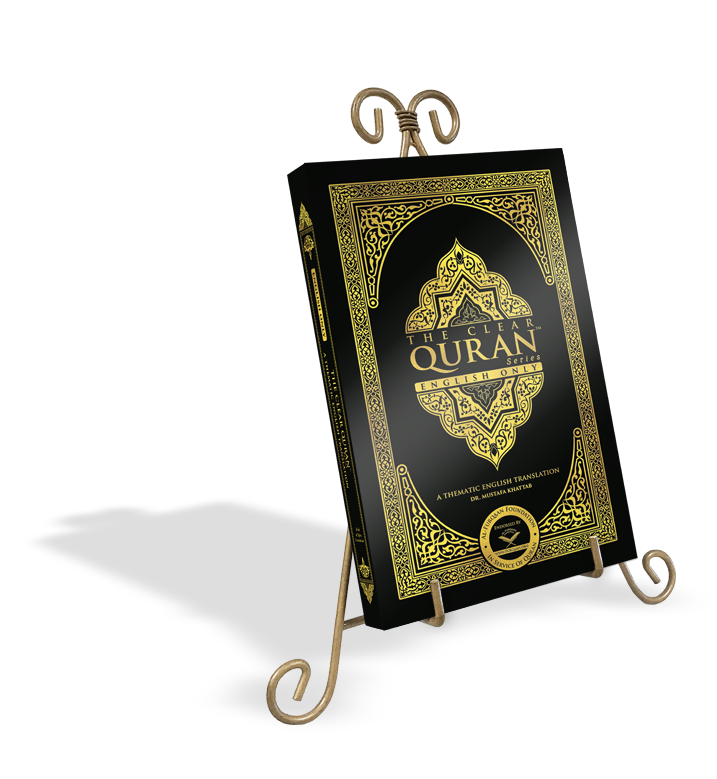
That model ultimately helped create the platform through which The Clear Quran® series, translated by Dr. Mustafa Khattab, reached a global audience. More than six million copies have reached readers around the world. What began as a focused distribution effort became the foundation for a much broader ecosystem of publishing, education, community services, and Quranic initiatives.
Wajahat Sayeed started Al-Furqaan Foundation® in 2003. Having spent many years as an Executive in corporate America, after his education at Arizona State University, Wajahat Sayeed has had an aggressive, high growth and prosperous career, starting in the investment management world, moving to Management consulting in Strategy and Operations with such prestigious companies like PriceWaterhouseCoopers. His corporate training has allowed him to bring the kind of professionalism, structure, and corporate governance to Islamic organizations and other Muslim businesses that he has been part of and advised over the years. Prior to starting Al-Furqaan Foundation®, Wajahat Sayeed has served many Islamic organizations in various capacities, including the Muslim Legal Fund of America as an Executive Director and Islamic Association of Collin County as the Chairman of Long-term Strategy and Community Development. He currently serves on the Board of the Islamic Centre of Western Suburbs in Bartlett, IL, and also as a House of Representative member on the Council of Islamic Organization of Greater Chicago (CIOGC).
Hussain Kedwaii did his bachelor’s and MBA from Southern Illinois University at Carbondale, IL. He has about 20 years of experience in IT with companies like AT&T and Electronic Data Systems in different capacities such as project manager and architect. Hussain Kedwaii is part of Al-Furqaan foundation from its inception and on the board since 2004- 2005. He has been the president and served on the board of Islamic Association of Collin County. During his tenure at IACC, he was responsible for starting the first Islamic School in Collin County, Texas. Currently he is the Chairman of steering committee of Furqaan Academy – Collin County.
Mohammad Abdul Ghani got his B.S in computer science from Hyderabad, India and his M.S in computer science from IIT (Illinois Institute of Technology), Chicago in spring 2006. Since then, he has been working at Orbitz in downtown Chicago in his capacity as a programmer. Mohammad Abdul Ghani has been on the board of Al-Furqaan Foundation® since 2005. He has also been part of Riyadus Saliheen Instituite as a student instructor (located in Lombard, IL) since 2008. While attending school, he had been a very active member of MSA-IIT and held various important positions in MSA. Mohammad Abdul Ghani is a well-known khateeb (speaker for Friday Sermons) in Chicago land area. Being a student of knowledge, his particular interest of study is fiqh (Islamic Jurisprudence).
Dr. Mohammed S. Sayeed has been involved with Al-Furqaan Foundation® since its inception as a founding board member. He rejoined the board in 2009. He has been actively involved with fundraising numerous times for the Foundation. Having graduated from HKES Dental College in India, Dr. Sayeed moved to London, England to pursue a Master’s degree in Oral and Maxillofacial Surgery. In 1999 he moved to Chicago and joined the University of Illinois at Chicago for a 2 year Doctor of Dental Surgery. Program and gained his License to practice Dentistry in the United States. He has now been in practice for a total of 12 years with almost 8 years in the United States. Within 3 years of obtaining a license he successfully started 3 private practices in Chicago, which he runs along with other Associate Dentists. He is also in the process of manufacturing a disposable toothbrush for which he has already got a patent pending status. He has established a company called MISWAK TOOTHBRUSH which has a branch in Hyderabad, India which is responsible for manufacturing the tooth brush. He hopes to launch it in the United States by the end of this year.
Dr. Syed Salahuddin is on the board of Al-Furqaan Foundation® since 2013. He was born in Kuwait. He is a Dentist by profession and did his dentistry from India. He worked as a Dentist in Kuwait for five years until he decided to move to USA in 2006. He also holds a PG Diploma in Psychological counseling, ESMEDS Polyclinics and hospital administration. He is also a current member of the outreach program at Masjid al-Noor in Dublin, Ohio.
Over the years, Abdul steadily advanced through roles of increasing responsibility, developing deep expertise in enterprise IT systems, project management, and client relations. Today, he serves as an IT Manager, where he leads teams responsible for delivering technology solutions to Fortune 500 clients across multiple industries.
In his current role, Abdul oversees large-scale IT projects from planning through execution, managing cross-functional teams and ensuring alignment between technical delivery and business objectives. He has been instrumental in helping major corporate clients modernize their infrastructure, improve system efficiency, and navigate complex digital transformation initiatives.
Known for his strong leadership and problem-solving abilities, Abdul has built long-term relationships with enterprise clients, many of whom rely on him as a trusted advisor for their technology strategy. He continues to mentor junior team members and contribute to the growth of his organization’s IT consulting practice.
NEED HELP?
Popular questions are answered below but if you would like to know anything specific please feel free to call us.
When people are in a hospital, they are going through important transformations in life. It may be due to illness or some other reason; but at such a time of transformation people are open to very fundamental questions in life like death, God, truth, etc. The famous former singer Yusuf Islam, had a turning point when he was in the hospital. Again, it was being in the hospital and reading Quran that brought about this profound change. If your questions are still unanswered, please contact us.
There are a few advantages in doing this. First, when a person is traveling, he/she is more open to new experiences. Second, we need to make a mindset that shows The Quran is a holy book alongside other holy books like the Bible. This increases the chances for people to read The Quran. Third, it is a free outlet from a legal perspective; therefore, why not use The Quran?
The sunnah of Dawah is to do dawah through The Quran. Yes, we can make pamphlets with Quranic themes, but when we are doing mass distribution, then the whole of The Quran covers all the topics needed for any individual as The Quran mentions: make clear on the issues people differ and the Messenger! Deliver what has been revealed to you from your Lord; and if you do it not, then you have not delivered His message, and Allah will protect you from the people; surely Allah will not guide the unbelieving people. We are strongly of the opinion that it is our duty as Muslims to communicate the Message of The Quran to non-Muslims. This, we believe, is achieved by delivering The Quran in the language that people are able to understand. Also, there is no book or pamphlet on the planet that can address the various intellectual appetites of the readers. The Quran is able to address and answer the questions of people across many walks of life, from politicians to teachers to scientists; to the rich person to the poor person; to the young and the old; and the common man. Everyone can find their questions answered and at the level of their intelligence. We believe that no pamphlet can serve this purpose. However, we will supply pamphlets that will address questions that arise once a person has read The Quran. Really it is a question of what you lead with pamphlets or The Quran. The Quran being the only book on the planet that has not changed, and has the impact of bringing people to Islam from the time it was revealed, has a better chance of bringing people to tauheed than anything else.
The sunnah of Dawah is to do dawah through The Quran. Yes, we can make pamphlets with Quranic themes, but when we are doing mass distribution, then the whole of The Quran covers all the topics needed for any individual as The Quran mentions: make clear on the issues people differ and the Messenger! Deliver what has been revealed to you from your Lord; and if you do it not, then you have not delivered His message, and Allah will protect you from the people; surely Allah will not guide the unbelieving people. The Quran is very clear that the message has to be given in the language of the people of a place. The Quran says, and We never sent a prophet except in the language of its people. We learn from this ayat that we have to give the message of Quran in the language that will make sense to them. Dawah is not just giving people information, rather it is making sure it reaches the heart, which the Quran calls “Balagh.” How do we reach the heart of the people other than in the language of the people. There are several popular people that have come to Islam by their personal readings of The Quran, such as Malcolm X, Jeffery Lang, Dr. Maurice Bucaille and Yusuf Islam just to name a few. As mentioned earlier, it is not possible to translate The Quran into another language. Rather you are only able to produce the meaning of what someone’s interpretation of a particular verse is, which is different from translation. Furqaan Project is distributing therefore the Translation of the Message of The Quran.
A minority group of scholars are of the opinion that The Quran translation cannot be published without the Arabic text. Their reasoning is based on the supposition that the Injil (Bible) and the Torah (Jewish Scriptures) were corrupted due to translations being made from translations without regard to the original text, so that over time the original message of the Bible and the Torah has changed beyond recognition. Our scholars disagree with this supposition and present the following arguments for the permissibility of publishing the Meaning of the Translation only.
First and foremost, the supposition that the bulk of the corruption contained in the Bible and Torah are due to translation and mis-translation etc. is incorrect. While a small degree may be attributed to mis-translation, the bulk of the corruption is due to the following reasons: Allah (SubhanaWaTaala) did not wish for these books to be preserved. The books were meant for a certain people for a certain time period. The corruption in the Bible appeared about 300 years after Jesus Christ, when the Council of Nicea (under the leadership of the Pagan Emperor Constantine) decided to use only the gospels we have today and physically destroyed all other manuscripts of other gospels. According to the book “What did Jesus Really Say,” hundreds of gospels, some of them that probably contained the truth as Allah had revealed to prophet Jesus were systematically destroyed. The gospels we have today that were adopted are still preserved in their corrupted form in Greek, with nothing to do with translation errors. The primary reason we have so many corruptions in the Bible today is because of this and not because of translations.
Allah SWT has said in The Quran that He will preserve The Quran. Unlike the other revealed books, Allah SWT has taken it upon Himself to preserve The Quran. Therefore, any thoughts of somehow The Quran changing because of translations is absurd due to this main reason, the promise of Allah SWT. Today, millions of people all over the world in every culture and race have memorized the entire Quran, which is a testament to the promise of Allah SWT that He will preserve The Quran. Even if all the manuscripts of The Quran on the planet were to be destroyed and only the translations left, The Quran cannot be changed even an iota or be destroyed.
To further guarantee the safeguarding of The Quran, Allah SWT has made the reading of The Quran mandatory in our prayers. In Fajr, Maghrib, and Isha it is recited loudly and anyone (even a child) can openly correct the Imam leading prayers if mistakes are made in the recitation. No matter which language The Quran is translated into, all these texts of the translations always make it clear to the reader that the original Quran is in Arabic and in Arabic alone and has been preserved in the form it was originally revealed. Also, any translation is really the interpretation of the meaning of what The Quran is saying based on the translator’s ability and understanding. Therefore, technically speaking, there is no direct translation of The Quran. To truly understand The Quran one must learn the Arabic language to fully comprehend it.
The non-Muslims to whom we are distributing these copies to, they cannot read the Arabic and it really serves no purpose. Including the Arabic for the purposes of our project may then end up violating other verses in The Quran that say “la yamassahu illal mutahharoon” (“none can touch its meanings but the pure people”).
Based on these reasons, Furqaan Project has decided to publish primarily the English translation, with other translations coming later. We will however publish a small quantity of Arabic and English (or other language) for those non-Muslims who specifically request it, or if Muslims want to have their children read this simple English translation. Also, bear in mind, that Furqaan Project is not the first in making an English-only translation. This has been done for the last 250 years, particularly in the last 60 years.
Need To Know More?