
Views: 27 min read
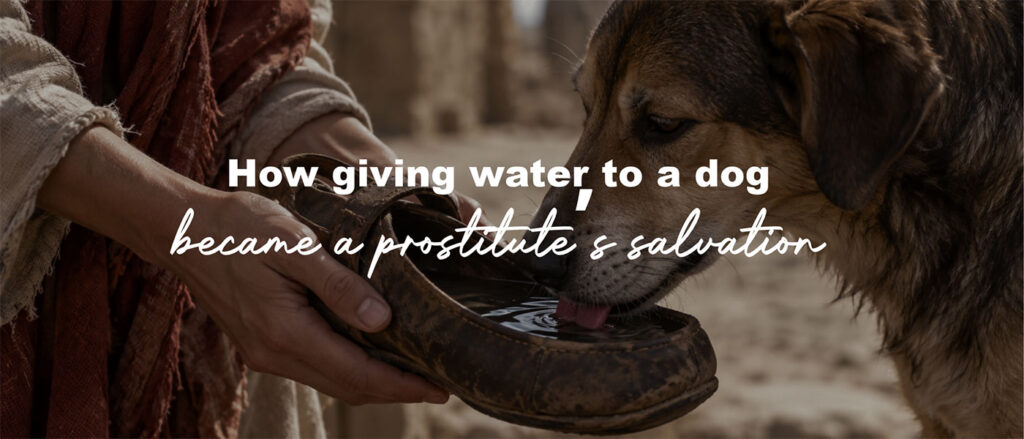
Among the most moving stories in the teachings of the Prophet (SAW) is the account of a woman who was forgiven by Allah (SWT) because of a simple act of mercy towards a thirsty dog. The woman was known for prostitution, a serious sin in Islam, yet when she saw a dog panting from extreme thirst near a well, she was moved by compassion. She removed her shoe, used it to draw water, and gave the animal something to drink. The Prophet (SAW) told his companions that Allah (SWT) forgave her because of what she had done. The story is authentically reported in both Sahih Bukhari and Sahih Muslim. Its power lies partly in how unexpected an incident this is. The woman is introduced through a sinful part of her life, but she is not reduced to that sin. In a single moment, she shows genuine mercy to a helpless creature, and Allah (SWT), who knows what is hidden within every heart, gives that deed a weight no human observer could have measured.
This does not mean that sin is unimportant, nor does it teach that a person can knowingly persist in wrongdoing and simply compensate for it with occasional good deeds. Rather, the hadith reveals something profound about Allah’s (SWT) mercy and about the danger of judging people only by what we can see. Allah (SWT) says, “Say, O Prophet, that Allah says, ‘O My servants who have exceeded the limits against their souls! Do not lose hope in Allah’s mercy, for Allah certainly forgives all sins. He is indeed the All-Forgiving, Most Merciful.’” (The Clear Quran®, 39:53). Elsewhere, He declares, “‘Ordain for us what is good in this life and the next. Indeed, we have turned to You in repentance.’ Allah replied, ‘I will inflict My torment on whoever I will. But My mercy encompasses everything. I will ordain mercy for those who shun evil, pay alms-tax, and believe in Our revelations.’” (The Clear Quran®, 7:156)
The woman’s act was small from the outside. She just gave an animal water, and to many that’s no big deal. The dog could not reward her, praise her, or tell anyone what she had done. Yet her compassion mattered to Allah (SWT). That is what makes this brief story so rich—it teaches us about mercy, sincerity, hope, our treatment of animals, and the way we look at people who have sinned. From this remarkable incident, there are at least five important lessons that remain deeply relevant to Muslims today.
1. No good deed is too small.
One of the clearest lessons from this story is that we should never underestimate the value of a good deed. Giving water to a thirsty dog may have seemed like a small and ordinary act, yet Allah (SWT) gave that act such tremendous weight that it became a cause for the woman’s forgiveness. What appears insignificant to us can be immense in the sight of Allah (SWT) when it is done with genuine goodness and sincerity. The Quran teaches this principle plainly, “So whoever does an atom’s weight of good will see it.” (The Clear Quran®, 99:7) Nothing good is lost with Allah (SWT). A kind word, a small act of generosity, helping someone in difficulty, feeding a hungry creature, or quietly relieving another being’s suffering may seem minor at the time, but we do not know which deed Allah (SWT) may accept and greatly reward.
This is an important reminder because people sometimes become so focused on large acts of worship or charity that they overlook the opportunities for goodness directly in front of them. The woman in this hadith did not perform something grand in the eyes of the world. She simply saw suffering and responded to it. Unfortunately, in the modern era, we see that there are many who are a witness to suffering, yet make the weary and safe decision to remain a bystander. A believer, therefore, should never say, “It is only a small good deed.” We may know the size of an action, but we do not know its value with Allah (SWT). Sometimes the deed we barely remember may be the deed that Allah (SWT) loves most.
2. Mercy towards animals matters more than you think!
This story also teaches that kindness toward animals is a serious part of Islamic character. The woman was not rewarded for helping someone who could repay her or thank her, she was rewarded for showing mercy to a helpless animal that was suffering from thirst. The Prophet (SAW) said, “In every living being there is a reward.” (Sahih Bukhari) This means that compassion toward animals is not something trivial or separate from faith. Feeding them, giving them water, protecting them from harm, and treating them gently can all become acts of worship when done sincerely for the sake of Allah (SWT).
Islam repeatedly teaches that strength does not give us the right to be cruel. Animals are part of Allah’s (SWT) creation, and human beings are responsible for how they treat them. The woman in this story saw suffering and chose not to ignore it. Her response reminds us that mercy should extend beyond ourselves and even beyond other human beings. For Muslims today, this lesson can be practiced in very ordinary ways such as caring properly for pets, avoiding cruelty, helping injured or hungry animals when possible, and remembering that Allah (SWT) sees how we treat even the creatures that cannot speak for themselves.
3. Do not judge people by their past (yours could actually be far worse).
Another important lesson from this story is that we should be very careful about judging people based only on their past. The woman in the hadith was known for a serious sin, yet Allah (SWT) knew something about her heart that other people could not see. Her compassion toward the thirsty dog became a reason for her forgiveness. Human beings usually see only a small part of another person’s life. We may know what someone has done, what people say about them, or what mistakes they have made, but we do not know the full condition of their heart or how they may have changed. Allah (SWT) alone possesses that complete knowledge. The Quran reminds us, “Indeed, your Lord knows best who has strayed from His Way and who is rightly guided.” (The Clear Quran®, 6:117)
This does not mean that Islam ignores the wrongdoing or that harmful behavior should never be criticized. It means that condemning a sin is different from deciding that the sinner is beyond hope. A person who has made serious mistakes may sincerely repent, change, and become beloved to Allah (SWT). The woman in this story is therefore a reminder to remain humble in the way we look at others. We should never assume that someone’s worst moment tells us everything about who they are or who they may become. Allah’s (SWT) judgment is based on knowledge far greater than our own.
4. Sincerity gives good deeds their value
The woman in this story did not help the dog for attention, praise, or any worldly reward. The animal could not thank her, and there was no crowd watching what she did. Her act of mercy was simple and private, which reminds us that some of the most valuable deeds are those performed sincerely for the sake of Allah (SWT). The Prophet (SAW) taught us that, “Actions are judged by intentions, and every person will have only what they intended.” (Sahih Bukhari) This means that the value of a deed is not determined only by how impressive it looks on the outside—a small act done with a sincere heart can be more beloved to Allah (SWT) than a much larger act performed for recognition.
This is an important lesson in a world where good deeds can easily become public displays. Islam encourages us to examine why we do what we do. Are we seeking the pleasure of Allah (SWT), or are we mainly seeking the approval of others? The woman’s act reminds us that Allah (SWT) sees the good we do even when no one else does. We may never know which quiet and sincere deed will carry the greatest weight for us in the Hereafter.
5. Show mercy if you hope for mercy
Perhaps the deepest lesson in this story is that mercy is never wasted. The woman saw a creature suffering and allowed that suffering to move her heart. She could have walked past the dog, but instead she chose to help it. In return for the mercy she showed to one of Allah’s (SWT) creatures, Allah (SWT) showed mercy to her. The Prophet (SAW) taught this principle beautifully in a hadith when he said, “The merciful are shown mercy by the Most Merciful. Be merciful to those on the earth, and the One above heaven will have mercy upon you.” (Jami at-Tirmidhi) Mercy, therefore, is not merely a pleasant quality, it is one of the characteristics that Islam seeks to cultivate within the believer. The story also reminds us that compassion should always lead to action.
The woman did not simply feel sorry for the thirsty dog, she went to the actual effort of drawing water from the well and relieving its suffering. True mercy is often demonstrated in what we are willing to do for someone, or something, in need. If we hope for forgiveness, kindness, and the mercy of Allah (SWT), then we should strive to make mercy part of the way we live. Whether it is shown to our families, strangers, the poor, the vulnerable, or even an exhausted animal searching for water, no sincere act of compassion is insignificant to Allah (SWT).
This is your reminder to never underestimate the good in your life
The story of the woman who gave water to a thirsty dog is brief, but its message is profound. It teaches us that no good deed is too small, that kindness toward animals matters, that we should be cautious about judging others, that sincerity gives our actions their true value, and that those who show mercy can hope for the mercy of Allah (SWT). Above all, this hadith reminds us that Allah (SWT) sees what people often overlook. He sees the quiet act of compassion, the hidden intention, and the goodness that may exist in someone whom others have written off.
As Allah (SWT) says, “Do not spread corruption in the land after it has been set in order. And call upon Him with hope and fear. Indeed, Allah’s mercy is always close to the good-doers.” (The Clear Quran®, 7:56) The woman in this story may have been known to people for her sin, but she became known to generations of Muslims for an act of mercy. That alone should make us reflect on how we view others, how seriously we take even the smallest opportunities to do good, and how much hope we should always place in the mercy of Allah (SWT).
Dua
O Allah! Fill our hearts with mercy, sincerity, and compassion. Help us never to underestimate a good deed, never to look down upon those who have sinned, and never to despair of Your forgiveness.
Make us among those who show mercy to Your creation and, through Your infinite mercy, forgive our shortcomings and draw us closer to You.
Ameen ya Rabb!